
7th Annual Holiday Toy & Book Event Help make the holidays brighter this year!
SeaWorld’s Supplier Rips Endangered Giant From Wild Waters
Matthew Russell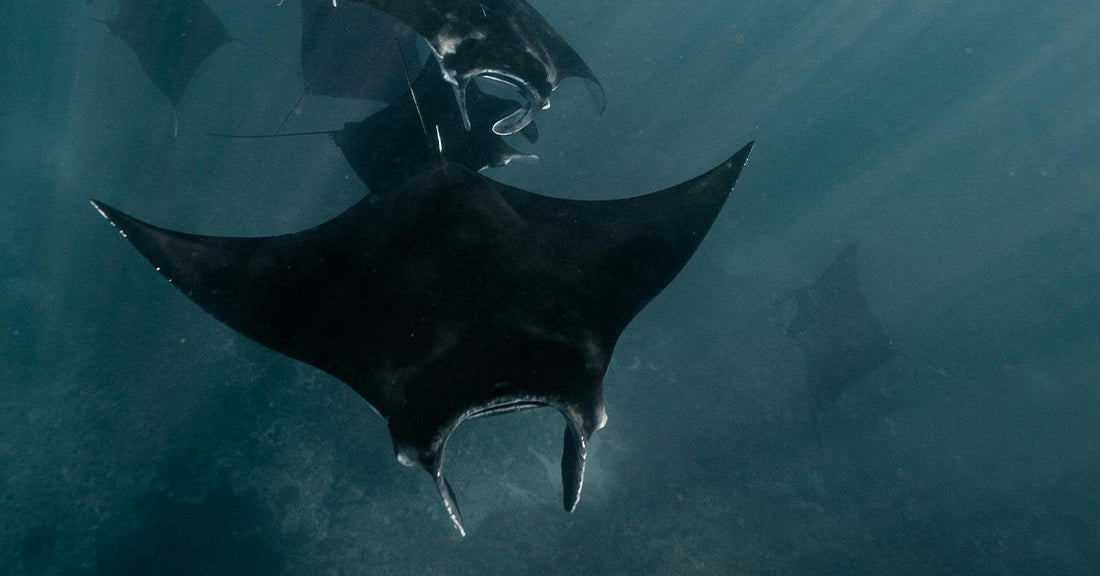
The waters off Shell Island in Florida are typically known for serene encounters with dolphins, stingrays, and the occasional glimpse of a majestic manta ray gliding beneath the surface. But a recent incident captured on video turned awe into outrage, as tourists and conservationists witnessed the live capture of an endangered giant manta ray by a commercial fishing crew.
The ray, struggling as it was pulled aboard a vessel, was not the victim of an accidental snag. It was a planned and sanctioned removal from the wild.
The company behind the capture, Dynasty Marine Associates, operates out of Marathon and supplies live marine life to public aquariums and retail stores across Florida and the Caribbean. According to Local 10 News, this capture was conducted under a Marine Special Activity License—legal on paper, but devastating in reality.
 A protected manta ray was captured near Panama City Beach.
Legal But Lethal
The Florida Fish and Wildlife Conservation Commission confirmed that Dynasty Marine held a valid license that authorized the take of one manta ray for purposes such as exhibition or research. This type of license grants exceptions to regulations normally protecting marine life, permitting the capture of otherwise prohibited species for educational or commercial purposes.
Legal authority does not equal ethical conduct. The spectacle recorded by onlookers painted a picture not of research or conservation, but of exploitation.
The manta ray, a species protected under the U.S. Endangered Species Act, was visibly distressed. Observers from nearby tour boats reported that it was not caught through the mouth but snagged and forcibly dragged to the surface over the course of 30 agonizing minutes.
The animal thrashed as it was placed in what looked like a child’s plastic pool on the boat deck, then taken back to shore for delivery—reportedly for eventual display at SeaWorld Abu Dhabi, according to World Animal Protection.

The animal thrashed for over 30 minutes during the capture.
A Dying Species in a Shrinking Habitat
Manta rays are pelagic creatures. They roam open oceans, swimming vast distances daily. Confining one to a tank deprives it of its most fundamental biological needs. Experts widely agree that giant manta rays do not adapt well to captivity. Many die prematurely. Their bodies, built for gliding across miles of ocean, suffer in artificial enclosures no matter how advanced the design.
The capture of even a single ray for a life of captivity is not a neutral act—it’s a blow to a population already dwindling from climate change, bycatch, and pollution.
The National Oceanic and Atmospheric Administration mandates that manta rays must be released in a way that promotes survival if caught incidentally. This wasn’t an incidental catch.
As Yahoo News Australia reports, the crew had a net ready, worked deliberately, and acknowledged their intent. The legality of the permit raises deeper questions about the systemic frameworks that allow the commercial acquisition of endangered animals for entertainment.
SeaWorld’s Longstanding Pattern
This is not the first time Dynasty Marine has captured a manta ray for SeaWorld, according to The Independent. SeaWorld has a lengthy history of controversial practices, from the wild capture of orcas in decades past to the present-day confinement of highly intelligent marine animals.
Despite rebranding efforts and public relations campaigns, the company continues to benefit from a system that treats living, endangered creatures as display items.
Tourists who witnessed the capture didn’t leave inspired by marine life—they left disturbed. Their experience didn’t include an educational encounter with a wild animal but a graphic illustration of the cruelty hiding beneath the surface of marine entertainment. This wasn’t a rescue. It was a transfer from one kind of prison to another.
A False Flag of Conservation
Supporters of marine displays often argue that public exhibition leads to education and empathy, but evidence continues to mount that real conservation does not involve confinement. As WMBB reports, observers like Water Planet USA CEO Denis Richard stressed that less invasive methods, like drone surveillance and breath sampling, already exist for marine research. These tools do not cause trauma or death. They do not rely on hooks, nets, or tiny tanks.
Conservation means preserving ecosystems, ensuring species survival, and keeping wildlife wild. Taking an endangered species from its natural environment and placing it behind glass is not conservation. It’s theater, backed by permits and profit.
Click below to make a difference.