
Uncovered Sketches Reveal Last-Minute Design Changes On The Statue of Liberty
Guest Contributor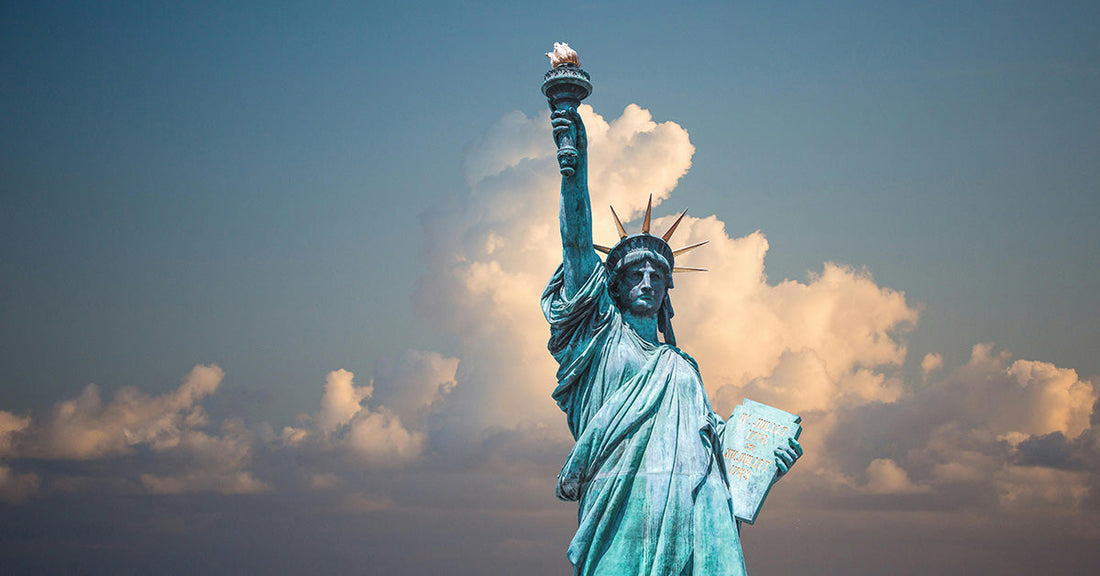
In a remarkable twist of historical discovery, newly uncovered sketches from Gustave Eiffel’s workshop have shed light on a last-minute design change to one of the world’s most iconic monuments: the Statue of Liberty. These original engineering drawings, found unexpectedly in a folder purchased at a Paris auction in 2018, reveal that Lady Liberty’s raised arm—long a symbol of freedom and welcome—was not always intended to look the way it does today. The revelation offers fresh insight into the creative and structural decisions behind the statue’s final form and the collaboration between its designer, Frédéric Auguste Bartholdi, and Eiffel, the engineer best known for the Eiffel Tower.

The discovery was made by Barry Lawrence Ruderman, a map dealer who had acquired what he believed to be blueprint copies related to the statue’s construction. However, the folder contained far more than expected: 22 original engineering drawings, complete with detailed annotations and calculations. These documents had remained hidden in plain sight, stuck together for decades until a conservator placed them in a humidified chamber to gently separate the fragile pages. What emerged were intricate sketches of Eiffel’s iron trusswork and structural supports, many of which had never been seen before.

One of the most striking revelations from these documents involves the statue’s raised arm. Several sketches depict a version of the arm with a bulkier shoulder and a higher torch position than what was ultimately constructed. These early designs suggest that Eiffel had initially planned a sturdier support system to anchor the arm, which would have been critical given the statue’s 151-foot height and copper exterior, as thin as two stacked pennies. The structure needed to withstand not only its own weight but also the intense winds and corrosive salt air of New York Harbor.
What makes this find particularly compelling is the presence of red ink markings on some of the blue ink drawings. These annotations appear to outline a modified arm angle—tilted more outward—matching the final version of the statue. Historian Edward Berenson, author of The Statue of Liberty: A Transatlantic Story, noted that the red markings suggest someone was actively trying to revise the arm’s angle without compromising the structural integrity of the statue. “This could be evidence for a change in the angle that we ended up with in the real Statue of Liberty,” Berenson said.
The date on the sketches—July 28, 1882—indicates that this alteration came relatively late in the construction process. By that time, much of the statue had already been built, making such a significant structural change all the more surprising. The engineering challenges would have been immense. Eiffel had already designed an internal skeleton of wrought iron, complete with a system of springs to absorb wind forces. He also included asbestos insulation between the iron frame and the copper exterior to protect against temperature fluctuations and corrosion. These innovations allowed the statue to endure the elements for decades, with only minor swaying—up to three inches at the base and six inches at the torch—during 50 mile per hour winds.
What remains unclear is how this last-minute design change was approved without Eiffel’s direct oversight. Some historians speculate that Eiffel, who was juggling multiple projects by that point, may have delegated the final stages of the statue’s construction to his assistants. This could have given Bartholdi the opportunity to make modifications without needing Eiffel’s explicit approval. “Bartholdi played down Eiffel’s contributions because he was kind of an egotistical guy,” Berenson explained. This tension between artistic vision and engineering practicality adds a new layer to our understanding of how the statue came to be.
For decades, scholars had hypothesized that Eiffel’s original plans included a more robust support for the raised arm, but without physical evidence, those theories remained speculative. The rediscovery of these annotated sketches not only supports that idea but also offers a tangible link to the collaboration—and possible friction—between Bartholdi and Eiffel. I found this detail striking, as it highlights how even monumental works of art and engineering are subject to human decisions, compromises, and last-minute changes.
The Statue of Liberty’s journey from concept to reality was a complex one, involving nearly a decade of construction, a transatlantic voyage from France to the United States, and a two-year reassembly process. It was finally dedicated on October 28, 1886, and has since become a global symbol of freedom and hope. The newly discovered sketches enrich this legacy by providing a deeper understanding of the statue’s evolution and the minds behind its creation.
For those interested in the structural history and symbolic meaning of the Statue of Liberty, these findings are more than just architectural curiosities. They offer a rare glimpse into the decision-making process behind one of the world’s most enduring landmarks. As more historians and engineers study these documents, it’s likely that further insights will emerge, continuing to shape our understanding of this monumental work.
