
The Courage and Legacy of the World War II Paratroopers of Easy Company
Guest Contributor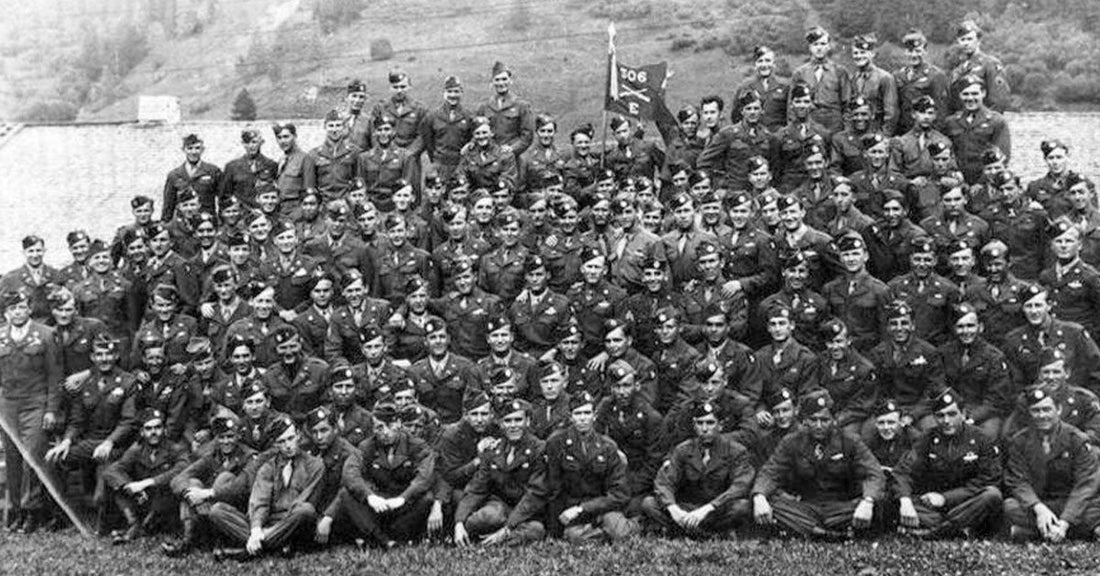
Few military units from World War II have captured the public imagination like Easy Company, the paratrooper unit of the 101st Airborne Division made famous by HBO’s 2001 miniseries Band of Brothers. Based on the book by historian Stephen E. Ambrose, the show introduced millions to the real-life soldiers who trained, fought, and endured together through some of the most critical battles in the European theater. But the true story of Easy Company, from its grueling formation to its haunting encounters on the battlefield, is even more compelling than its dramatization. For those interested in the history of Easy Company, World War II paratroopers, or the real men behind Band of Brothers, the deeper narrative reveals a legacy of courage, hardship, and unbreakable camaraderie.

Easy Company, officially known as E Company, 2nd Battalion, 506th Parachute Infantry Regiment of the 101st Airborne Division, was formed in July 1942 at Camp Toccoa, Georgia. Its original 147 members came from diverse backgrounds, but they shared a few common traits: they were young, white (due to the segregated military of the time), and mostly unmarried. Their training was intense, led by the controversial but effective Captain Herbert Sobel. Sobel’s strict and often harsh methods earned him resentment among the men, but even his critics acknowledged that his discipline helped shape Easy Company into an elite fighting force.

Richard “Dick” Winters, who would later become the company’s most respected leader, remembered how officers came and went during training, many unable to meet the demands. Winters himself came from humble beginnings, working his way through college, while others, like Lewis Nixon, came from wealth and privilege. Despite their differences, the men of Easy Company forged a powerful bond through shared hardship and purpose.
In September 1943, Easy Company was deployed to England in preparation for its first combat mission. That mission came on June 6, 1944: D-Day. Parachuting into Normandy as part of Operation Overlord, they faced chaos and heavy fire. Edward Shames, a member of the unit, recalled that the scene resembled the Fourth of July, with explosions lighting up the coast. Despite losing 65 men in the operation, Easy Company distinguished itself early. Winters led a daring assault on German artillery at Brécourt Manor, improvising a plan under fire and successfully disabling the guns with minimal casualties. It was a moment that would define his leadership and the company’s reputation.
Easy Company’s journey didn’t end in Normandy. They took part in Operation Market Garden in the Netherlands, a bold but ultimately flawed attempt to secure key bridges. Later, they were sent to Belgium, where they endured the brutal winter and relentless attacks during the Battle of the Bulge. These moments tested their endurance as much as their combat skills. Winters and Nixon, who had become close friends, were among those who helped maintain morale and cohesion under the most trying conditions.
In April 1945, Easy Company encountered one of the war’s most horrific realities: the Nazi concentration camps. At the Kaufering IV camp, a subcamp of Dachau, they found thousands of prisoners who had been subjected to forced labor and death marches. Shames, the son of Russian Jewish immigrants, later said the experience haunted him for the rest of his life. “The stench and horror will be with me as long as I live,” he recalled.
Yet even amid tragedy, there were moments of strange levity. In early May 1945, Easy Company was ordered to capture Berchtesgaden, the Bavarian town that housed Adolf Hitler’s Eagle’s Nest. Shames remembered arriving first and looting the premises, including bottles of cognac labeled “for the Führer’s use only,” which he later used to toast his son’s bar mitzvah. The men also discovered Hitler’s private wine collection, which they reportedly enjoyed before the war officially ended on May 8, 1945.
By the time Easy Company disbanded later that year, it had suffered 150 percent casualties, with new recruits constantly replacing the fallen. According to Ambrose, at its peak, Easy Company was “as good a rifle company as there was in the world.” The bonds formed in battle endured long after the war. Many veterans stayed in touch, attending reunions and maintaining friendships that had been forged under fire.
It was at one of these reunions in 1988 that Ambrose found the inspiration to write Band of Brothers. He was struck by the closeness of the men, a connection he described as “a closeness unknown to all outsiders.” Ambrose conducted extensive interviews with surviving members and even shared drafts of his manuscript for their feedback. Not all veterans agreed with their portrayals, but the book succeeded in capturing the essence of their shared experience. As Ambrose wrote, “Comrades are closer than friends, closer than brothers. Their trust in, and knowledge of, each other is total.”
Though the last surviving member of Easy Company, Edward Shames, passed away in December 2021, the unit’s story continues to resonate. Through books, television, and the memories of those who knew them, Easy Company remains a symbol of sacrifice, resilience, and unity during one of history’s darkest chapters. I found this detail striking: even in the face of unimaginable horror, these soldiers found ways to preserve their humanity and humor — a testament to the enduring strength of the human spirit.
