
Lieutenant Ronald Speirs' Courageous Legacy in Easy Company
Guest Contributor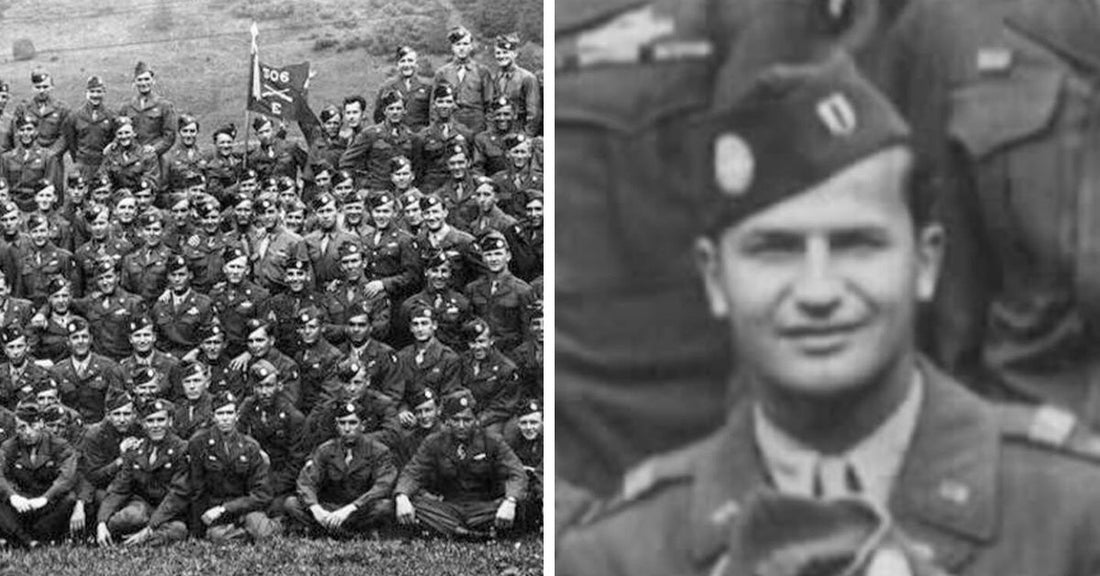
During the harrowing days of World War II, few soldiers earned reputations as fierce and fearless as Lieutenant Ronald Speirs. As a paratrooper in the U.S. Army’s 506th Parachute Infantry Regiment, he became one of the most talked-about figures in the real-life “Band of Brothers.” Known for his daring courage and controversial decisions, Speirs’ story is a compelling glimpse into the brutal realities of combat and the extraordinary individuals who endured them. His legendary run through German lines in the Belgian village of Foy remains one of the most remarkable moments of the war, and it helped define the legacy of Easy Company.

Born in Edinburgh, Scotland, on April 20, 1920, Ronald Speirs came to America as a young child when his family moved to Boston in 1924. Though originally trained as an accountant, Speirs chose to serve when war broke out, volunteering for the U.S. Army and eventually joining the elite Parachute Infantry. This unit, considered one of the most dangerous assignments in the military, came with rigorous training and the promise of airborne combat. The decision also came with a financial incentive—an extra $100 a month—which Speirs accepted before beginning intense preparation that would take him from Georgia’s Mt. Currahee to combat drops over Nazi-occupied Europe.

Speirs’ first combat experience came during the D-Day invasion in June 1944. As a platoon leader with E Company, he parachuted into Normandy amid low cloud cover, landing miles off target. Despite the chaos, Speirs led his men toward Brecourt Manor, encountering German soldiers along the way. With orders to take no prisoners, Speirs reportedly shot several enemy troops, a decision that drew both praise and controversy back home. The Boston Globe later reported that he had been awarded the Bronze Star for killing 13 Nazis during the invasion. At Brecourt Manor itself, Speirs displayed quick thinking by pressing a live grenade into the mud with his boot, preventing casualties among his men and sustaining only minor damage to his footwear.

One of the most unforgettable moments in Speirs’ military career occurred in the Belgian town of Foy. During the Battle of the Bulge, American forces were split, and one company found itself on the far side of the village without a working radio. The situation was dire. According to accounts from fellow soldiers, Speirs took it upon himself to run directly through the center of the German-occupied town. The Germans, reportedly stunned by the sight of an American soldier sprinting through their lines, failed to react in time. After delivering orders to the stranded company, Speirs turned around and ran back the same way he came. Fellow soldier Carwood Lipton described the feat as “impressive,” a sentiment echoed throughout Easy Company.
This act of bravery earned Speirs command of E Company, a role that would cement his place in military history. Later chronicled in historian Stephen Ambrose’s book Band of Brothers, the story of Easy Company and its leaders captured the attention of readers and viewers alike. Speirs, portrayed as both heroic and enigmatic, stood out for his unwavering resolve and the rumors that followed him.
Indeed, the legacy of Ronald Speirs is not without controversy. While some accounts praised his battlefield decisions, others questioned his methods. One widely circulated story claimed that he shot a platoon sergeant during the Normandy invasion. According to Speirs, the sergeant, intoxicated and disobedient, refused orders to retreat and even pointed his weapon at Speirs. In response, Speirs shot him. Major Dick Winters, another respected figure in Easy Company, later wrote that Speirs’ actions likely saved the lives of the rest of the squad. These events, while contentious, are part of what makes Speirs such a complex figure in the annals of military history.
Other stories about Speirs remain difficult to verify. Some claimed he executed German prisoners after offering them cigarettes. Others suggested he had a ruthless streak that bordered on the extreme. When publisher Simon and Schuster reached out to Speirs during the publication of Band of Brothers, concerned about potential legal issues, Speirs reportedly dismissed the notion with characteristic bluntness, saying, “I’m 81 years old, what can they do to me now?”
After the war, Speirs continued to serve in the military, later becoming the governor of Spandau Prison in Berlin. He retired as a lieutenant colonel and lived a relatively quiet life until his death on April 11, 2007, at the age of 86. His story remains one of the most compelling in the history of Easy Company—marked by acts of extraordinary bravery, controversial decisions, and an unshakable commitment to his mission and his men.
I found this detail striking: even with the weight of war and the burden of command, Speirs faced each challenge with a level of decisiveness that few could match. His story speaks not only to the horrors of war but also to the individuals who, for better or worse, shaped its course through sheer force of will.
