
CIA Remote Viewing and the Search for the Lost Ark of the Covenant
Guest Contributor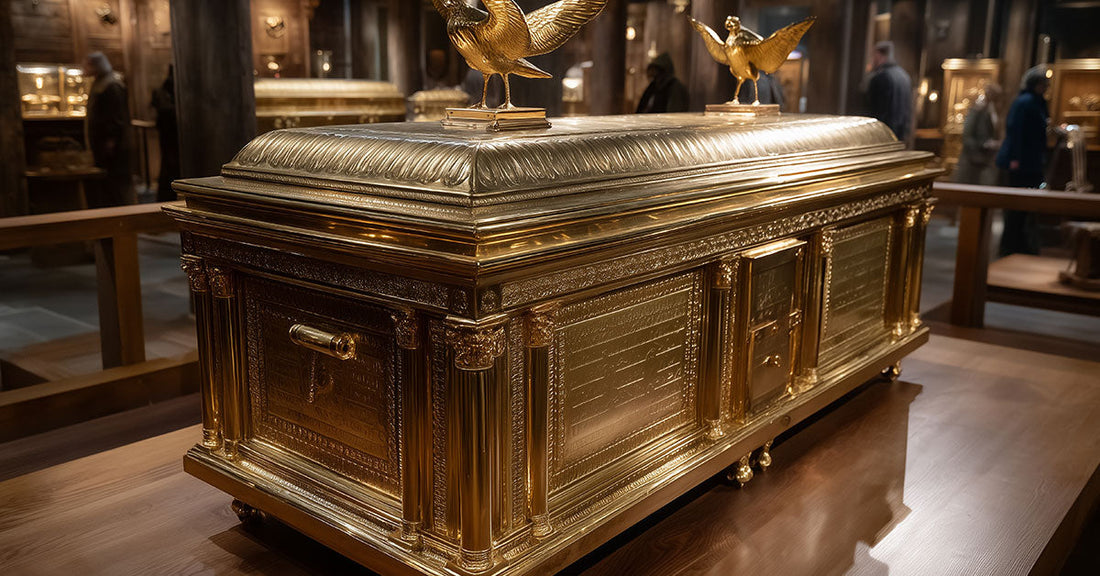
In a revelation that sounds more like the plot of a Hollywood adventure film than a government initiative, declassified CIA files have confirmed that in 1988, the agency employed a psychic to try to locate the lost Ark of the Covenant. This unusual endeavor was part of a broader Cold War-era program known as Project Sun Streak, which explored the use of psychic phenomena—specifically a technique called remote viewing—to gather intelligence and locate objects of interest. The story offers a fascinating glimpse into the lengths intelligence agencies were willing to go in pursuit of elusive targets, including one of the most legendary religious artifacts in history.

The Ark of the Covenant, believed by many to have held the original stone tablets of the Ten Commandments, has captivated historians, archaeologists, and theologians for centuries. According to biblical accounts, the Ark was kept in the Temple of Solomon in Jerusalem before vanishing during a Babylonian invasion in the 6th century B.C.E. Despite numerous expeditions and theories about its whereabouts, the Ark's true location remains one of history’s enduring mysteries.

Enter Project Sun Streak. In the 1980s, this CIA initiative aimed to harness the purported abilities of psychics to visualize distant or hidden targets. On December 5, 1988, a psychic identified only as "remote viewer #32" was tasked with locating an unspecified item. The viewer was not told the nature of the object in question, a standard practice intended to prevent any bias or influence over their visions. It was only later revealed that the target was the Ark of the Covenant.
During the session, the psychic described being in a dark, subterranean chamber in the Middle East, surrounded by Arabic-speaking men and near several mosques. The room was lined with what appeared to be mummies, and in its center was a large, ornate container. According to the declassified CIA files, the container was described as wooden, adorned with gold and silver, and shaped like a coffin. Notably, the psychic mentioned it was decorated with seraphim—angelic beings prominent in both Jewish and Christian traditions.
The psychic went further, suggesting the object had profound spiritual significance and contained "historical knowledge far beyond what we now know." Such statements, while intriguing, were accompanied by warnings. The viewer claimed the Ark was protected by mysterious entities and could only be opened by those deemed worthy. Anyone attempting to force it open, they warned, would face destruction by a power unknown to modern science.
I found this detail striking: the idea that the CIA would not only entertain the notion of psychic abilities but apply them to a search for a biblical relic speaks volumes about the era’s experimental mindset. During the Cold War, unconventional intelligence methods were not uncommon, and the U.S. government explored a range of fringe sciences in the hope of gaining a strategic edge.
Joe McMoneagle, a U.S. Army chief warrant officer and one of the first remote viewers employed by the CIA, later criticized the session. Speaking to The New York Post, he emphasized the lack of verification, stating, “If someone claims that remote viewing proves the existence of something, such as the Ark of the Covenant, they must produce the Ark to substantiate their claim.” He added that no efforts were made to confirm the psychic’s vision, and the results were accepted without empirical evidence.
Indeed, no physical evidence of the Ark has ever surfaced. The psychic’s vivid description, while compelling, remains unverified. As such, this episode joins a long list of unconventional CIA operations that, while fascinating, ultimately yielded no concrete results. From a historical and cultural perspective, however, it offers a unique lens through which to view the intersection of intelligence work, spirituality, and legend.
The use of psychics in intelligence gathering, particularly through remote viewing, has been the subject of much skepticism and debate. Critics argue that the practice lacks scientific credibility, while proponents claim it has yielded useful results in certain cases. In the context of Project Sun Streak and the search for the Ark of the Covenant, the episode serves as a reminder of the extraordinary measures taken during a time of intense geopolitical rivalry.
Today, the Ark continues to inspire curiosity and speculation. Whether hidden in a secret chamber, lost to history, or purely symbolic, its legacy endures. The CIA’s attempt to locate it using psychic methods may not have succeeded, but it adds another chapter to the enduring mystery surrounding one of humanity’s most revered artifacts.
