
Suggestion To Use Troops As Urban Training Force Sparks Fury Over Freedom And Homefront Trust
Matthew Russell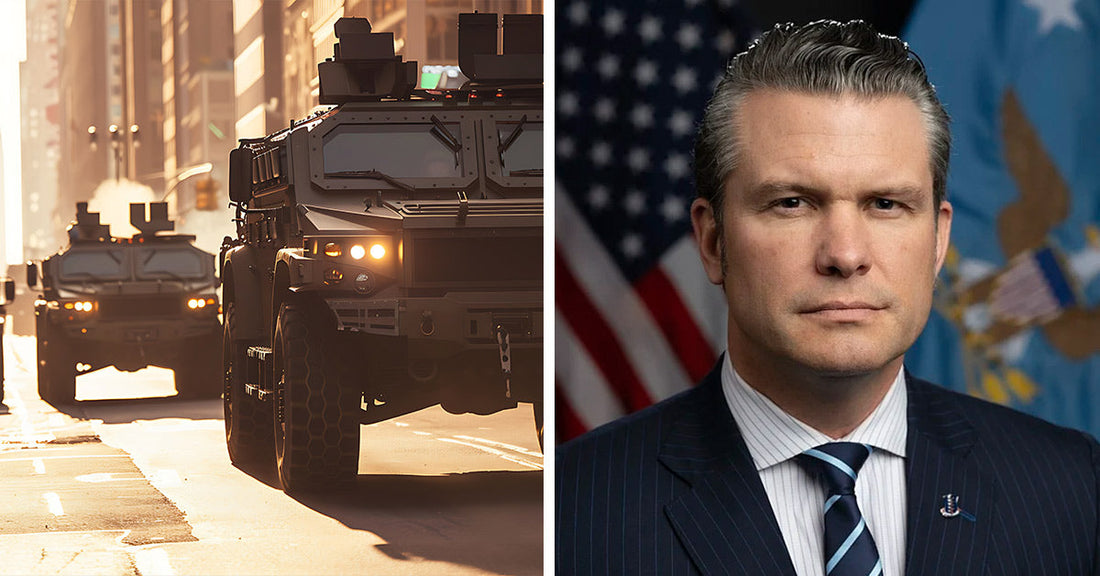
U.S. Defense Secretary Pete Hegseth used a rare gathering of admirals and generals at Marine Corps Base Quantico to declare the end of “woke” culture, warn senior officers to resign if they disagreed, and push “male-level” fitness standards across combat roles — a package he framed as restoring lethality and discipline, Reuters reports.
His speech promised fewer career-ending repercussions for “minor infractions” and a tougher training ethos, including looser hazing protections and broader authority for drill instructors, according to Military.com.
Critics inside and outside the force immediately questioned what this would mean for suicide prevention, command climate, and accountability.

The president suggested using “dangerous cities” as training grounds for the military.
‘Training Grounds’ In U.S. Cities
Alongside Hegseth, President Donald Trump floated a more explosive idea: deploying troops to “dangerous cities” as “training grounds,” casting domestic disorder as an “invasion from within,” the Associated Press reports. The room of uniformed leaders remained largely stone-faced as he spoke, a tableau that underscored how far this concept sits from longstanding norms about an apolitical military.
The Legal Rub: Posse Comitatus And Precedent
The idea intersects with the Posse Comitatus Act, which restricts federal troops from domestic law-enforcement roles. National Guard forces under state control are an exception; once “federalized,” they are not, AP reports. Trump has already pushed those boundaries with prior deployments and border surges, raising questions about how far the executive can go without state consent or new legislation.

Posse Comitatus limits federal troops in law enforcement roles.
Veteran Reactions: Readiness vs. Culture War
Some veterans welcomed stricter physical standards so long as they remain job-relevant and fairly enforced. Others saw a culture-war project that risks talent loss and unit cohesion. Marine veteran Janessa Goldbeck called Hegseth’s approach “stoking grievance” rather than “strengthening the force,” AP reports. Meanwhile, Hegseth said women could serve if they meet the same standards, asserting “war does not care if you are a man or a woman.”
Civil-Military Boundaries At Stake
The sharper flashpoint is not fitness tests but the proposition to use American neighborhoods for military practice. Senior lawmakers warned that conditioning troops for domestic action risks politicizing the ranks and eroding trust with the public they serve; Sen. Jack Reed called the Quantico event “dangerous” and the loyalty-test rhetoric “profoundly” troubling, Reuters reports.
For many veterans, the debate is practical: training is about realism, but turning cities into proving grounds could blur lines between warrior and police, invite legal quagmires, and strain communities already wary of federal force.

Veterans debate readiness gains versus constitutional risks.
The Road Ahead
Hegseth promised reviews of rules of engagement and inspector-general processes and urged officers who disagreed to step aside, The Guardian reports. Whether those shifts deliver readiness gains without eroding legal and ethical guardrails will define the fallout — in the ranks, among veterans, and in the cities that could be asked to host the nation’s wars at home.
Click below to make a difference.