
7th Annual Holiday Toy & Book Event Help make the holidays brighter this year!
Missouri State University Uncovers 1830s William Townsend House Foundation
Guest Contributor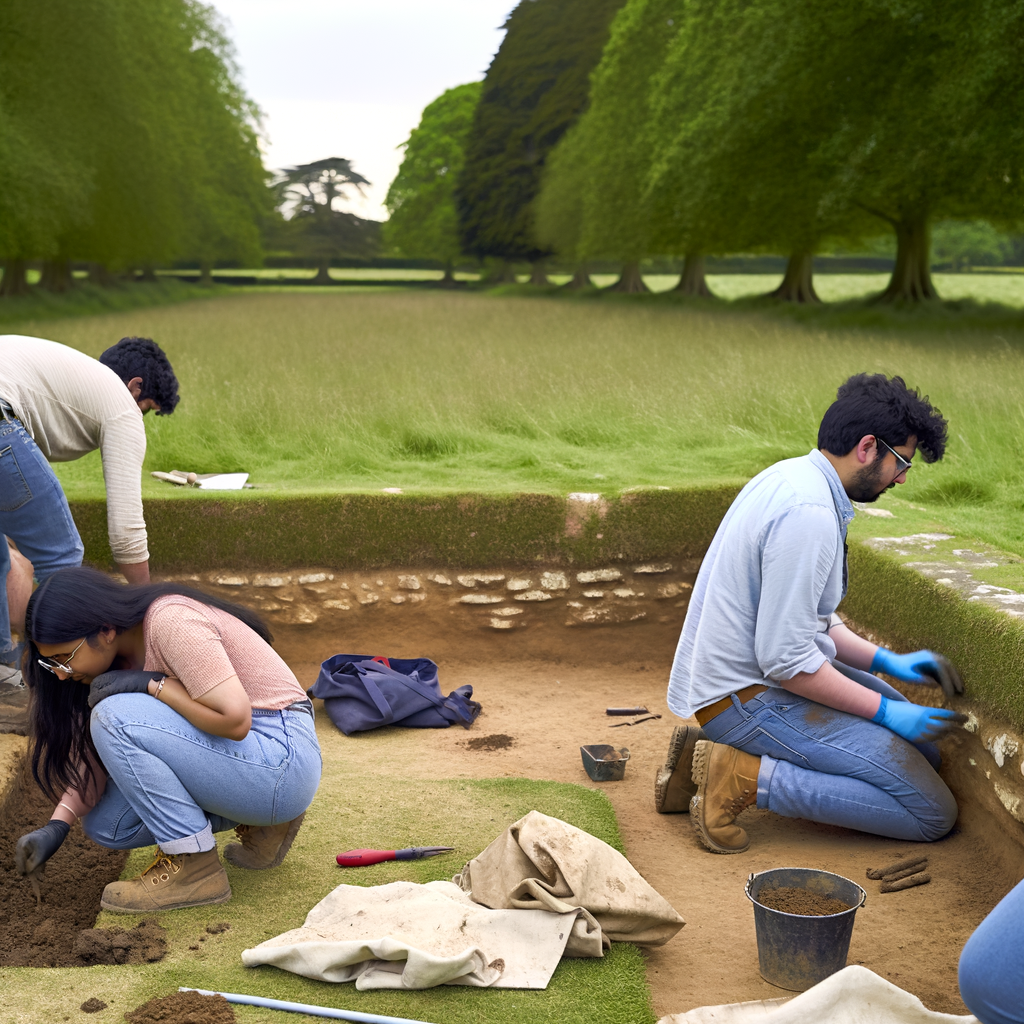
In a remarkable discovery that sheds new light on Missouri’s early pioneer history, archaeology students from Missouri State University have uncovered the foundation of a homestead dating back to the 1830s. The find, located at the McKenzie-Townsend archaeological site in Springfield, is believed to be the remains of the William Townsend house, one of the earliest known homes in the region. This significant excavation offers a rare glimpse into antebellum life and serves as a valuable contribution to the understanding of early settlement in Missouri.

This discovery was the culmination of a three-week field school led by the university’s Center for Archaeological Research (CAR), where 20 undergraduate students gained hands-on experience in surveying and excavation. According to the university, the McKenzie-Townsend site had been explored in previous digs in 2008 and 2012, which unearthed Civil War-era buttons and 19th-century ceramics. However, the actual structure associated with these artifacts had remained elusive—until now.

Kevin Cupka Head, director of CAR, admitted he wasn’t overly optimistic about finding anything substantial during this year’s session. That changed in the final week of the dig, when the team uncovered a 10-foot section of the foundation wall from the Townsend homestead. Alongside the wall, archaeologists found nails, ash, ceramics, and other debris, which they believe may have fallen through wooden floorboards during the home’s occupation. These findings paint a vivid picture of daily life nearly two centuries ago.
“It’s neat. You don’t really find sites this early with so much intact,” Head told the Springfield News-Leader. I found this detail striking, as it highlights just how rare and valuable well-preserved archaeological sites from this period are. The structure’s preservation offers a tangible link to Missouri’s formative years and the people who shaped its early communities.
The homestead is named after William Townsend, who arrived in Missouri from Tennessee in 1832 with his family and several enslaved individuals. Historical records suggest the Townsend family lived on the property until around the 1850s. The site is also named for Alexander McKenzie, another early landowner in the area. The combination of archaeological evidence and historical documentation makes this site particularly compelling for researchers.
The discovery of the Townsend house not only confirms historical accounts but also adds depth to them. Artifacts like ceramics and ash deposits offer insight into the domestic routines of early settlers. “It’s always really helpful to find these domestic settings, the way people were living their day-to-day lives,” Head noted. These everyday remnants, while modest, provide invaluable context for understanding the social and cultural fabric of early 19th-century Missouri.
One of the most intriguing aspects of the site is the potential presence of a lost pioneer cemetery. Archaeologists plan to return to the McKenzie-Townsend site with hopes of locating and studying the cemetery, which could further illuminate the lives—and deaths—of the area’s early inhabitants. Preserving such sites is vital, especially in areas where development can threaten historical resources.
Head emphasized that archaeology is not just about exotic digs in far-flung locations. “It mostly involves going around our backyard and making sure we’re doing what we can to protect historic sites and cultural heritage threatened by development,” he said. This grounded approach to archaeology underscores the importance of local history and the role communities can play in preserving it.
Looking ahead, CAR aims to display the recovered artifacts for public viewing, encouraging broader engagement with the region’s history. “The more public archaeology experiences we offer, the more we can inspire community interest and involvement,” Head said. This inclusive vision ensures that discoveries like the Townsend homestead can educate and inspire not just scholars, but also the wider public.
The unearthing of the William Townsend house is a landmark moment in Missouri archaeology. It not only validates historical records but also enriches them with physical evidence of pioneer life. As work at the site continues, there is hope that further discoveries—perhaps even the lost cemetery—will deepen our understanding of the people who once called this land home.
